Tag Archive for: Catholic Wedding

What Is a Catholic Marriage Certificate?

Finding a companion with whom you can spend the rest of your life is a gift. And if your dream is to marry in a Catholic Church, there are a few additional steps you need to know about. 

Because Catholics regard marriage as a sacrament, taking these crucial steps will help you prepare for the lifetime of love and commitment you are about to embark on. 

Choosing to tie the knot in a Catholic ceremony comes with specific expectations, restrictions, and additional requirements. 

You may be required to submit certain documents such as a Catholic marriage certificate,  participate more in church events, and go through an intensive marriage preparation procedure with a priest before being allowed for a Catholic wedding.

Frequently there are marriages between two baptized non-catholic members. Or even between Catholic Christians and a non-baptized Catholic member. 

The reality is that in cases of the latter, the consent of the diocesan bishop is required. When granted, the consent will permit a mixed marriage.

With that said, Catholic weddings are like any other kind of wedding in many ways. For instance, the church insured a credible catholic marriage certificate. 

And that will be our focus in this read. So what are catholic marriage requirements

Here, we will walk through everything you need to know about a marriage certificate. But before we get right at it, what is a catholic marriage certificate?
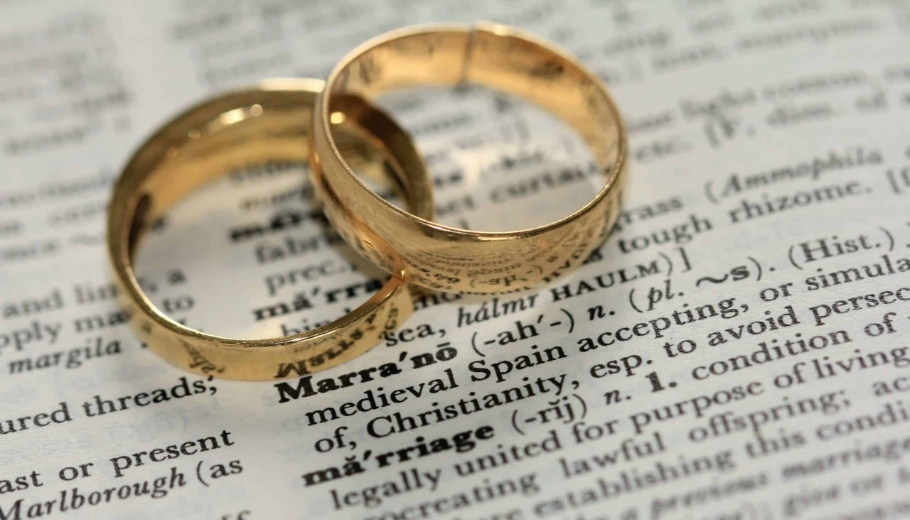
Two wedding rings placed on a Bible, representing the sacred bond of a Catholic marriage.
Photographer: Sandy Millar

What Is a Catholic Marriage Certificate?

A Catholic marriage certificate is presented to the newlywed couple as evidence that the marriage was “solemnized” (a ceremony took place). 

It is just one document that is necessary to complete the requirements for a legal Catholic marriage. 

However, simply having a Catholic marriage certificate is not enough. Before the ceremony, you are still required to obtain an official marriage license from the local government or registrar’s office in most places. 

The Process of Getting Married in A Catholic Church

If you are planning to have your wedding in a catholic church, below are the following processes you will have to follow. 

The Interview 

The first process of getting married in a catholic church is an interview which the priest will grant. Couples will be subjected to this interview before the wedding. So here’s the vital question: What are the things to expect? 

To start with, you must know that different aspects of your wedding may be affected if you intend to have one in a catholic church. Aspects like wedding dresses, bridal parties, catholic wedding venues, and more will be scrutinized by the priest. And these interviews come in different forms. 

The first is known as the initial investigation. The first interview entails required documentation, schedules with the priest, and all kinds of logistics. And the interesting part is that chances are the priest conducting the interview might not be the one officiating your wedding.

The second one is known as the prenuptial interview. A priest conducts this interview under oath. The purpose is to establish the understanding of the four basic principles of marriage, and that includes:

  • Marriage is exclusive 
  • Couples enter marriage freely 
  • It is open to procreation 
  • It is permanent

Requirements for a Catholic Marriage Certificate 

Before a marriage is considered valid before the eyes of the church, certain elements must be in place. 

Months before the wedding, the couples must attend several classes to duly inform the intending couples of their consent. These four requirements are:

  • The couple’s willingness to be married.
  • Both parties freely exchange their consent.
  • While consenting, the couples must have the intention of marrying for life. Staying faithful to one another and being open to procreation.
  • And lastly, consent must be in canonical form. That is in the presence of witnesses and an authorized catholic minister. 

Also, the Code of Canon Law demands that the wedding ceremony be held at the parish of the groom or bride. 

Suggested reading for you: Authentic Italian Catholic Wedding Traditions: all you need to know

Required Documents for a Catholic Marriage

You need to know that the required documents for a catholic marriage come in different forms. 

There are different sets of required documents set of couples like:

  • Between 2 Catholics
  • Between a Catholic and a Christain
  • For non-Catholics
  • Between a Catholic and non-baptized Christian

But below are the commonly required documents for a catholic marriage.

  • Baptism certificate issued within six months of the wedding day
  • Letter of freedom to get married. Also known as an affidavit.
  • Confirmation and first communion certificate.
  • Civil marriage license
  • A completed dispensation form 
  • Information of marriage
  • No form of an impediment to the marriage.

Pre-Cana

Now that the necessary documentation process is out of the way, the next on the list is Pre-Cana. 

Earlier, we mentioned that the couples will be required to attend a marriage class. The class is known as Pre-Cana. 

The church organizes the marriage-preparatory class. It comes with multiple sessions with a priest and other church-related activities. 

But the majority of the marriage-preparatory class has to do with your sessions with a priest. These sessions will cover the following:

  • Enlightening the couples on the teachings of the church on marriage. 
  • Couples will be asked about the present and likely issues that may cut across social behavior, handling finances, and many more. The focused matters here are the ones that are likely to be an impediment to faithfulness and fulfilling marital obligations. 

Determining Wedding Date 

Determining the date is unarguably one of the most aspects of planning a Catholic marriage. It’s no secret that Catholic churches often have an event-filled calendar. That is why it is advisable to have a calendar of events and holidays of your parish. Couples can get married any other day except on Holy Thursdays, Holy Friday, and Holy Saturday. 

Proper Dress Code

Appropriate clothing and dress code are non-negotiable for catholic and non-catholic churches. 

Marriage is synonymous with purity and holiness. And the Roman Catholic churches would like to keep it that way.

Therefore, if you are considering having a Catholic marriage, your dresses and garments must be modest. 

Not just that, your dresses must have modest cuts. It’s best if you can avoid deep-back gowns, high slits, sheer panels, and plunging necklines.

Some Catholic churches make it mandatory that the shoulders should not be exposed. 

Ask your parish about the dress code to save you from all kinds of embarrassment and inconveniences.  If you must, keep the stylish dresses for the reception.

The Importance of Catholic Marriage Certificate

The importance of a Catholic marriage certificate is that it serves as proof that a wedding takes place. 

Although, the marriage certificate issued by churches might not hold much water for legal dealings. But to a large extent, a marriage licence is legally binding as well as Catholic marriage.

Also, since a Catholic marriage certificate is legally binding, you can use it for purposes such as:

  • Change of name
  • Proving identity 
  • Filing taxes
  • Applying for loan/mortgage 
  • And sharing health benefits  

The Dos and Don’t of Catholic Marriage Conclusion 

There are many dos and don’ts when it comes to catholic marriage. Here are some you should watch out for.

  • You will agree that taking photographs at a wedding is as important as the wedding itself. However, it’s advisable to avoid taking pictures during a sacred event in a wedding. The flash of the camera will more likely distract the officiating priest.
  • When it comes to bridal parties, most Catholic parishes like it if the maid of honor is a Catholic. 
  • Modest dresses only are allowed for a catholic marriage.
  • Must abide by the 4 tenets of marriages.
  • Must provide all the required documents.
  • And lastly, all the dos and don’t provide by your parish must be followed to the letter.

The entire Catholic wedding ceremony takes up to 90 minutes. 

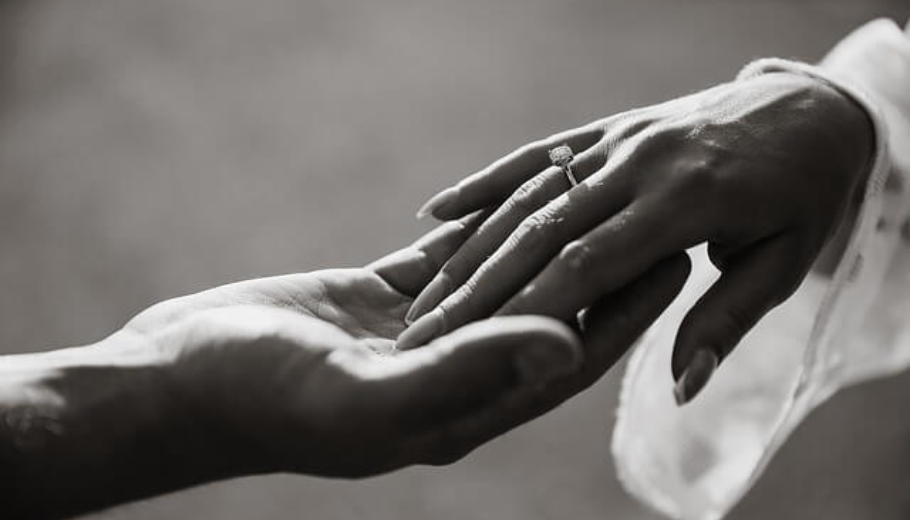
Spouses hands in hands reading the catholic marriage certificate
Photographer: Bastianoni Studio 

It includes a full mass and a holy communion which takes up to 60 minutes. The whole rite of marriage ceremony takes up to 45 minutes. 

The processional order for a Catholic wedding starts off with the groom and the best man entering first. Then the groomsmen and bridesmaids walk up to the aisle. 

This is followed by the entrance of the maid of honor. And lastly, the bride and her father walk up to the aisle.

Catholic weddings are not so different from the weddings you have attended in the past. The only differences are the little religious modifications. 

If you have been to Catholic weddings, you will know that they are always beautiful. Also, attending marriage-preparatory classes will also help your marriage in the long run.

Unlike other church wedding certificates, Catholic certificates are legally recognized. It can be used the same way court certificates are utilized. 

It can be used for change of name, proving your identity, filing taxes, applying for loan/mortgage, sharing health benefits, to mention a few.   

By now, I believe this read has done justice to understanding what is a Catholic marriage certificate, the process of getting married in a Catholic church, Catholic marriage requirements, and the perks of a catholic marriage certificate.

If you are searching for help for your Catholic Wedding, please let us know and send us a personal message, and let’s begin your Journey.
Up Next: 6 of the Best Places to Propose in Italy

What is Pre-Cana Rite in Catholic Church?

The diversity of sacred customs across nations and religions is one of the most attractive features of wedding rituals. For Catholics, marriage is considered a religious sacrament, and it often involves specific, time-honoured traditions.

Couples may be asked to submit particular paperwork, participate in more church events, and go through an intensive marriage preparation procedure (also known as Pre-Cana) with a priest before being allowed for a Catholic wedding.

While modern weddings are taking on new characteristics due to couples wanting to create unique experiences, having a Catholic wedding means you’ll be sticking to some age-old traditions.

There are many things to learn about honouring the Catholic marriage requirements, but today we’re going to focus on what is Pre-Cana and why it’s necessary.

What Is Pre-Cana rite?

Pre-Cana is a marriage preparation course, workshop, or consultation for couples planning to marry in a Catholic Church.

The name comes from John 2:1–12, when Jesus performed the miracle of changing water into wine at a wedding feast at Cana, Galilee.

All couples who wish to receive the Sacrament of Marriage in the Catholic Church must undergo Catholic marriage preparation.

Pre-Cana approaches can differ amongst Catholic dioceses and parishes. But generally speaking, a priest or deacon usually leads six-month sessions with the couple and the help of a married Catholic couple.

These discussions will be crucial for you as a couple in your forthcoming marriage, ensuring that you are both in agreement — or at the very least understanding — about each other’s beliefs and values.

Topics that you can expect to learn about include “family of origin” (your existing family roles, expectations, and traditions derived from your own upbringing), financial considerations, career goals and practical issues, communication skills, intimacy and sexuality, conflict resolution, Natural Family Planning (NFP), and the theology and spirituality of marriage.

Your Catholic marriage preparation or Pre-Cana is typically done in person. Although parishes and dioceses deal with dwindling finances, geographically expanding communities, and deployed military couples, online programs have arisen as a viable alternative to gathered celebrations.

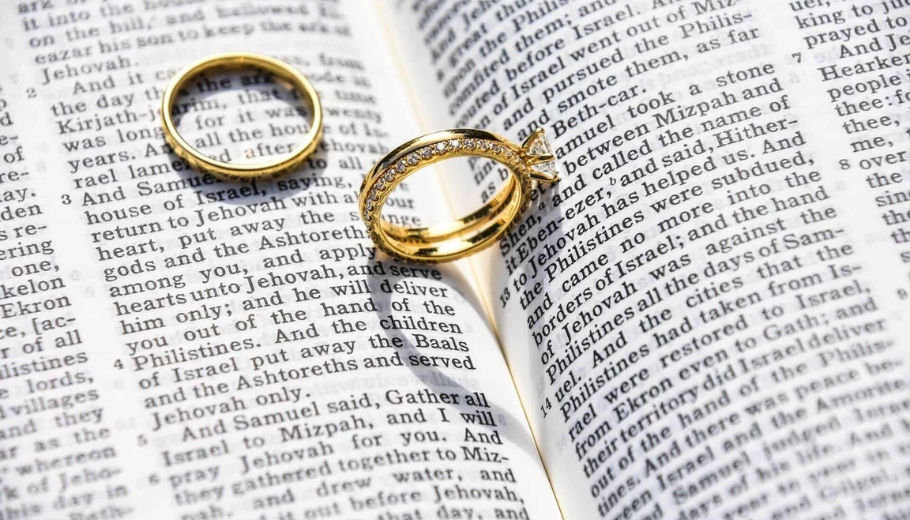
Two wedding rings placed on an open Bible, representing the spiritual significance of the Pre-Cana marriage preparation.

What Happens During Pre-Cana?

Depending on your dioceses, you may have to attend sessions for six months where you’ll be given opportunities to learn about marriage and to discuss many topics that can be considered challenging to address.

Another option that many Catholic Churches allow is a weekend retreat. In this retreat, you would spend an entire weekend with other couples preparing for the sacrament of marriage.

The Catholic marriage requirements of Pre-Cana is a program that you experience in one of the following formats.

First, check with your local Catholic church to see their requirements and offerings.

  • A series of weekly sessions with a sponsor or mentor married couple (typically held at their home),
  • A weekend retreat with other newlywed couples.
  • A web-based Catholic marriage preparation course.
  • A series of meetings with your deacon or priest.

Pre-Cana refers to all of the organized and systematic events that assist you and your fiancé(e) prepare for marriage. The church provides them as a tool to assist you and your fiancé(e) in better preparing for marriage.

A black and white photo of a man and woman holding hands, symbolizing unity and commitment during Pre-cana discussions.

Is Pre-Cana Mandatory?

Yes! Catholic Marriage Requirements dictate that the Pre-Cana is required for you to get married in a Catholic Church. And honestly, while it may sound like a headache or an invasion into your life, most couples find that they learn a lot.

It can be hard to talk about complex topics when you’re in love. And, of course, many things can occur during a marriage that you may never even anticipate.

So, when you participate in this Catholic marriage preparation, you’ll be challenged to open your hearts and dialogue about some pretty in-depth things.

Part of the Pre-Cana many times includes you partnering up with a married couple, kind of as mentors. Their experience will help you talk through challenging situations so that you both can understand the other’s beliefs and perspectives – or basically, how you would handle things.

A topic that might not have arisen in your relationship is “What if one of your jobs forced you to move? That’s probably not a topic you’ve talked about. Because for most people, it doesn’t happen. What if it happened, and one of you said, “I’m not going.” It’s important to know where you stand before marriage.

What if one of you got seriously injured or paralyzed? Do you know if your significant other would stand by you through it and take care of you?

Of course, we all like to think that married life will be a breeze and that challenging situations won’t happen. But, unfortunately, that is not reality.

It is so important, especially in today’s modern times, that you both understand how the other would react and if the marriage could survive, especially in today’s modern times. The Pre-Cana or Catholic marriage preparation will help you talk about these things to go into the marriage ready to tackle anything.

Why Pre Cana Rite is so Important?

Marriage preparation entails more than just knowing about the sacrament’s religious, spiritual, and theological dimensions (even though these are essential elements present in every marriage preparation course).

Practical parts of marriage preparation include things that will assist the couple in the “day-to-day aspects” of building a new family.

For example, family of origin, finances, conflict resolution, intimacy and sexuality, and various other topics are crucial to discuss before and during marriage to help the couple deal with significant concerns that we frequently neglect to discuss.

Of course, knowing the religious, spiritual, or theological aspects of the sacrament of marriage is an integral part of marital preparation. The course also contains practical discussions to assist you with starting a new family’s “day-to-day issues.”

Family customs, money, dispute resolution, intimacy and sexuality, and various other topics to discuss will help you prepare for critical concerns that we sometimes overlook before and during the marriage.

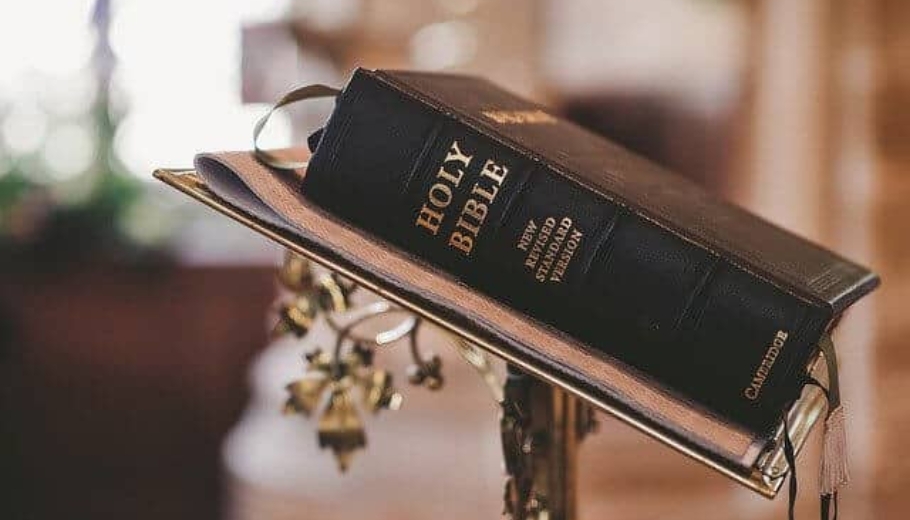
A Bible resting on a stand, representing the Pre-cana program and its focus on marriage guidance and spiritual growth

How Much Does Pre-Cana Cost?

Your Catholic marriage preparation course is not free. There is a fairly hefty fee for attending the weekend retreat — somewhere around $350 per couple, and the price can go up each year.

The six Pre-Cana sessions also cost money, but they are not quite as costly as the weekend. But, it’s always best to check with your local church as different demographic areas may be more (or less) expensive.

Does Pre-Cana Expire?

That’s a great question! If you have completed your Pre-Cana, you don’t have to worry about it expiring. Your certificate is valid for eternity. So when you’re ready to tie the knot, your certificate will be valid even if you postpone your wedding for two years.

When Should You Do The Pre-Cana?

Although specifics and criteria vary by parish, and it’s essential to verify where you plan to marry with the parish, the Catholic Church generally advises that you finish your Pre-Cana program six months before your wedding day.

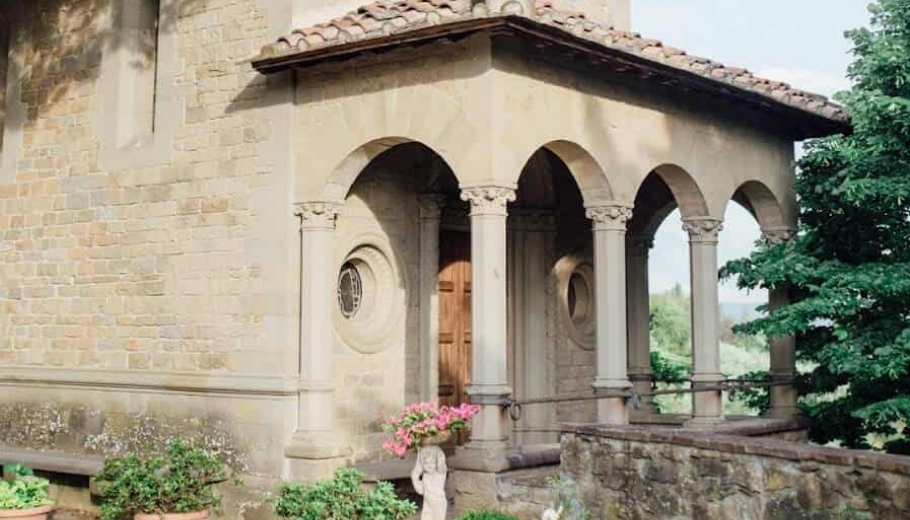
Stone building featuring arches and pillars, symbolizing the Pre-Cana program's focus on relationship foundations.

Suggested for you: Best Catholic Italian Destination Wedding

Can You Take The Catholic Marriage Preparation Online?

Yes! Many websites do offer the Pre-Cana courses online. But, it’s best to check with your local diocese to ensure it will be acceptable to them.

What Do You Do After Pre-Cana?

There is an online survey that you must complete. It asks you a series of questions on what you talked about at Pre-Cana, and you can choose to agree, disagree, or remain uncertain. To avoid cheating on each other, you and your fiance must answer individually. The findings are then forwarded to your church. Next, you schedule an appointment with a couple from the church who walks you through the questionnaire before leaving you alone to mull over the responses.

This isn’t meant to imply that you won’t be able to marry. No matter how many of your responses match (or don’t), the church will not intervene. It’s only to show you any potential red flags that you should address. Better to be prepared, right?

You will only be able to see your findings at this time. You will not receive a copy of the test to compare notes later. They aren’t going to be around in the future.

You can’t say anything like, “Remember at Pre-Cana you said…” and then bring the results out to look for proof offlip-flopping. This is just a way for you and your fiance to chat; it’s not anything you’ll be holding over each other’s heads later in life.

Do You Have To Do It Together?

Yes! Both of you must attend at the same time.

Is The Pre-Cana Worth It?

Absolutely! In today’s modern times, everyone is in a rush all the time. And we like to think that we really know someone without even having conversations about tough subjects.

Going into a marriage not knowing how your spouse will react to other successes and obstacles is a recipe for disaster.

We’ve heard stories of one spouse resenting the fact that the other earns more money, one whole-hearted will not move from their current location -ever, one likes to spend, the other is a penny-pincher and even stories of one spouse not wanting kids. Can you imagine?

Not knowing that the person you want to spend the rest of your life with doesn’t want kids, and you can’t wait to have them.

Sadly, this happens pretty often, and why? Because they never talked about it.

While this type of Catholic marriage requirement may seem extreme, we can assure you that there are many, many benefits.

No one likes to think their marriage is destined for divorce, right? No one goes into marriage thinking that.

Understanding who each other really is, what they stand for, how they will react, and the role that each one is comfortable being in are crucial to a successful marriage and lifetime commitment.

Dialogue is essential, and the Pre-Cana teaches you how to do it. Absolutely a must if you want a Catholic wedding.